
Think of a dental implant as an artificial tooth root.A small screw‑like post, usually made of titanium, is placed into the jawbone where the natural tooth used to be. After the bone heals and fuses around it, a connector (called an abutment) and a custom‑made crown (the visible “tooth” part) are attached on top. Together, they create a strong, natural‑looking replacement tooth that you don’t take in and out like a denture.
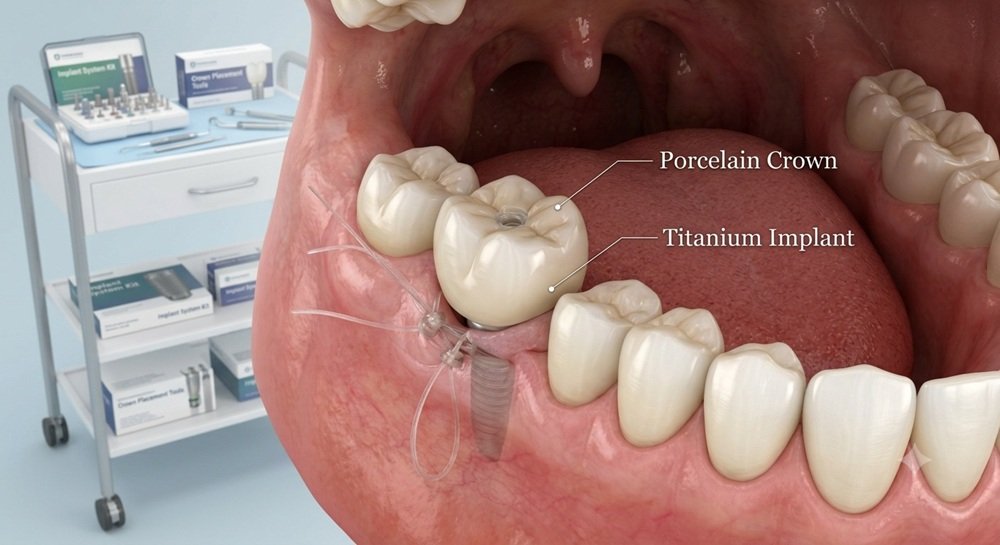
Key parts of an implant:
Implant post: acts as the new root inside the jawbone
Abutment: joins the post to the crown
Crown: the visible, tooth‑shaped cap that matches your smile
Because the implant is anchored in bone, you can chew, speak, and smile with confidence without worrying about it moving or slipping.
How does the implant process usually work?
The process is careful and step‑by‑step, because the goal is a tooth that can last many years:
Consultation and planning:
The dentist or implant specialist checks your mouth, takes X‑rays or scans, and talks about your medical history. They look at the amount and quality of bone, your gum health, bite, and expectations.
Preparation (if needed)
If a badly damaged tooth is still present, it may need to be extracted.
If bone is too thin or soft, a bone graft might be done first so the implant has a solid foundation.
Sometimes gum treatment is done to control infection before surgery.
Placing the implant:
Under local anaesthesia (and sometimes with sedation), the dentist gently opens the gum, prepares a small space in the bone, and places the implant post. The gum is then closed over or around it.
Healing and bone fusion:
Over the next few months, bone cells grow and fuse tightly to the implant surface. This process, called osseointegration, is what makes implants so stable and long‑lasting.
Attaching the abutment and crown:
Once the implant is firmly integrated, the dentist places an abutment, takes impressions or digital scans, and a custom crown is made to match the colour and shape of your other teeth. The crown is then fixed to the abutment.
For some carefully selected patients, “immediate” or “same‑day” implants and temporary teeth are possible, but most people still go through a healing period before getting the final crown.
What are the benefits of dental implants?
People often choose implants because they solve both functional and emotional problems caused by missing teeth:
Natural look and feel
Strong, stable chewin
Protects the jawbone
Comfort and convenience
Long‑term value
Who Needs a Dental Implant?
Not everyone automatically qualifies, but many people do. You might be a good candidate if:
1. Missing a Single Tooth
Ideal for replacing one tooth without touching nearby teeth.
2. Multiple Missing Teeth
Implants can support bridges for multiple teeth.
3. No Teeth (Full Mouth)
Full-mouth implant-supported dentures offer stability and comfort.
4. Broken or Decayed Teeth That Cannot Be Saved
Extraction + implant is the best long-term solution.
5. Difficulty Eating With Dentures
Implants offer a fixed, comfortable alternative.
How Does the Implant Procedure Work?
The implant process starts with a consultation and an X-ray or scan to check the bone structure. After planning, the titanium implant is carefully placed into the jawbone. This is followed by a healing phase of around two to three months, during which the implant fuses with the bone. Once healed, a custom-made crown is attached, completing the restoration and giving a natural-looking tooth.
Are Dental Implants Painful?
Most patients are relieved to know that dental implant placement is not painful. It is performed under local anesthesia, and the only discomfort afterward is usually mild soreness, which goes away quickly. The experience is far more comfortable than people expect.
How Long Do Dental Implants Last?
When implants are cared for properly, they can last 20 to 30 years or even longer. Their durability, strength, and natural appearance make them one of the most reliable tooth replacement options available today.
Conclusion
Dental implants provide a safe, long-lasting, and natural-looking solution for missing teeth. At Krishna Dental & Skin Clinic, Rohini, Dr. Gajendra Bansal is known for his painless implant placement, digital planning, and long-term restoration techniques. With a strong focus on comfort and precision, the clinic ensures every patient walks out with a stable, beautiful, and naturally confident smile.